Popular choices on Amazon
Most people replace their yoga mat far later than they should — or occasionally, earlier than necessary. Here’s how to actually tell when yours is done, and what typically determines how long a mat lasts in the first place.
The Real Warning Signs
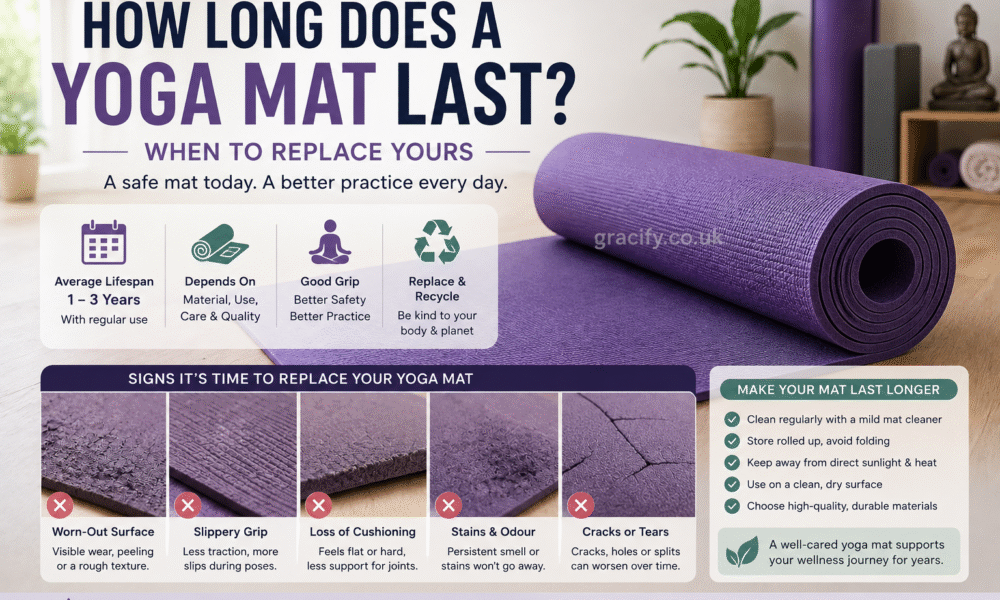
- Visible flaking or peeling on the surface — once a mat starts shedding small pieces, it won’t stop, and it’s usually a hygiene issue as much as a performance one.
- Permanent dents or grooves where you consistently place your hands and feet — a sign the cushioning material has broken down structurally.
- Grip that’s noticeably worse than when new, even after a proper clean. Texture wearing smooth over time is normal, but a sudden or dramatic drop in grip usually means it’s time.
- A persistent smell that washing doesn’t remove — porous materials can absorb sweat and bacteria over years of use to a point where cleaning stops being enough.
How Long Different Materials Typically Last
This varies a lot by material and how often you practise, but as a rough guide: PVC mats often last 1–3 years with regular use before grip and texture noticeably degrade. TPE mats tend to sit in a similar range, sometimes slightly less durable at the low end of the price bracket. Natural rubber mats, particularly higher-density ones, frequently last 3–5 years or more with proper care. Cork-topped mats are similarly durable, and cork’s natural antimicrobial properties mean they often stay fresher for longer too. Our material comparison guide covers durability alongside grip and cushioning for each option.
What Actually Shortens a Mat’s Lifespan
Leaving a mat rolled tightly for long periods, storing it in direct sunlight or a hot car, and infrequent cleaning are the three biggest accelerants of wear. Proper storage and regular (not excessive) cleaning genuinely extends a mat’s usable life by a significant margin — our guide to cleaning a yoga mat properly and guide to storing one correctly both cover the habits that make the biggest difference.
Replacing Without Overspending
A worn-out mat doesn’t necessarily mean spending more than last time — it’s a good opportunity to reassess what actually matters for your practice now versus when you first bought it. If budget is the priority, our budget yoga mats guide is worth a look, and our Yoga Mat Finder tool can help you decide whether to replace like-for-like or switch materials entirely based on how your practice has changed.
Getting More Life Out of the Mat You Own
Most mats are retired early for reasons that are preventable. Storing a mat rolled loosely rather than folded stops permanent creases, which are the usual first failure point on PVC and TPE. Rolling it with the top surface facing outward keeps the edges from curling upward and lifting during practice — a curled edge is a trip hazard, not just an aesthetic issue.
Cleaning habits matter as much as storage. Wiping after sweaty sessions prevents salt and oil building into the surface, but over-cleaning with alcohol-based sprays strips grip and dries out rubber and cork. Keeping the mat out of direct sunlight and away from radiators slows material breakdown considerably. Rotating end-for-end every few weeks also spreads wear, since almost everyone stands, kneels and places their hands in the same two spots every session — those two patches are what wear through first.
Frequently Asked Questions
How do I know when a mat is genuinely worn out?
Permanent thin or shiny patches where your hands and feet land, flaking material, a surface that no longer grips after cleaning, or cushioning that no longer springs back.
Can a worn mat cause injury?
Indirectly, yes. Lost grip leads to slipping, and compressed foam stops protecting wrists and knees, which is where most home-practice strain comes from.
Is it worth keeping an old mat?
Often — retired mats work well as a second layer under a knee, as a travel mat, or for garden and household use.