Yoga
Which Material is Best for Yoga Mat
Do you want to know about the materials the yoga mats are made of, before you decide to buy a new one Which Material is Best for Yoga Mat?
I think this is the most important aspect because your safety & protection, and performance depend on the yoga mat material. A few years ago, yoga mats came in a few basic materials with specific colors. But now, the world has changed with the tech.
Now you can find yoga mats in lots of colors and materials and all the materials have their advantages. The popularity of Yoga is increasing daily as it has a good impact on our physical & mental health. By understanding the real benefits of different materials, you can finalize the right one for you. So,
Let’s take a look a little deeper regarding which material is best for yoga mat
There are several types of materials for yoga mats
PVC Yoga Mat Material:
Polyvinyl Chloride is the most common material used to make yoga mats. This was the first material in which yoga mats came across the market. The PVC is built with organochlorides, they are toxic or dangerous. This chemical is used to build sewage pipes, shower curtains etc. This material is opened cells that’s why they absorb germs easily for a long time and are not suitable or eco-friendly for the environment.
Pros & Cons of PVC Yoga Mat Material:
Pros
- It’s a lightweight material so easy to carry
- A good option for beginners due to its grip and traction
- Easy to clean
- Affordable & widely available
Cons
- As I mentioned earlier in the article, not Eco-friendly and can be the cause of harm
- It becomes slippery when wet
- Are not biodegradable
- Absorb germs and can emit odor
Eco-Friendly TPE Material for Yoga Mat
TPE is also a type of plastic having elastic properties so, it’s easily molded and reused but difficult to recycle. You can say a good alternative for PVC.
Pros and Cons of TPE material for Yoga Mat
Pros
- It is lightweight and easy to carry
- TPE mats are not harmful due to non-toxic chemicals
- A good option for beginners due to its grip and traction
- TPE mats are eco-friendly and comfortable
Cons
- TPE mats are not very durable
- Expensive as compared to PVC
- Can be slippery on wet
- Not good in grip & has a light smell
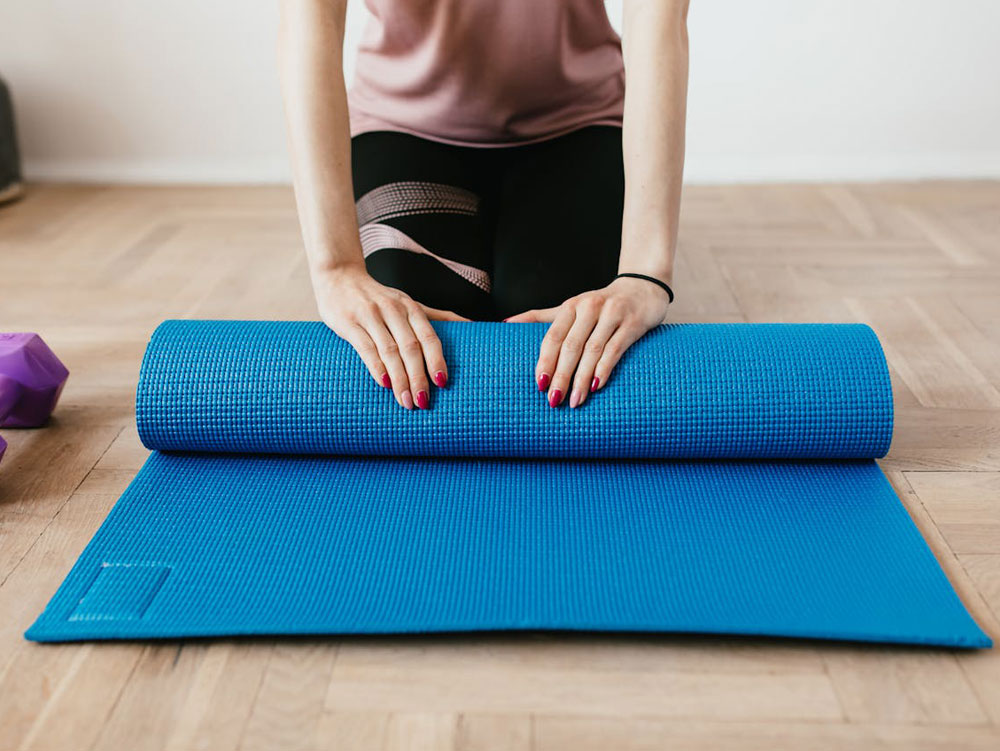
NBR Synthetic Rubber Yoga Mat Material
Stands for nitrile butadiene rubber material commonly used in automotive. This material is also used to make yoga mats due to its cushioning and good insulation but it’s not eco-friendly and can release some harmful chemicals during its production which is why, most countries don’t produce mats from it.
Pros and Cons of NBR Synthetic Rubber Yoga Mat Material
Pros
- It is Durable and long-lasting
- Non-slippery
- Best for cushioning, it means best for joints
- Affordable & easy to clean
Cons
- NBR mats are not eco-friendly
- Also not biodegradable
- NBR mats are not lightweight with strong smell
- Not good for grip and traction
EVA (Ethylene Vinyl acetate) Yoga Mats Material
This material is commonly used in toys, soles of shoes, sports helmets, etc. So, this means this material will be light in weight and will not be expensive. EVA Mats are good for cushioning and have different thicknesses. EVA material is anti-bacterial and water-resistant due to its closed-cell structure.
Pros and Cons of EVA Yoga Mats Material
Pros
- Light in Weight so it easy to carry
- Affordable & easy to clean due to closed-cell structure
- Durable or long-lasting with care
- Good for cushioning
Cons
- Could have an unpleasant odor
- EVA mats are not eco-friendly
- Less traction & loss cushioning with time
PU Yoga Mat Material
PU stands for Polyurethane which are synthetic polymers. Natural rubber and polyurethane (PU) mat material is popular among people who are concerned with good grip and cushioning. This material is used in coating furniture, paints, padding, fibers, and adhesives.
Pros and Cons of PU Yoga Mat Material
Pros
- PU mats are eco-friendly
- Durable & Long-lasting
- Biodegradable and good in grip and traction
- Easy to Clean
- Comfortable & providing cushioning
Cons
- Can be more expensive than other materials
- Texture may not be suitable for all
- Can be compressed with heavy use
- PU mats are not environment-friendly
Jute Yoga Mats Material
Jute yoga mats are durable and long-lasting mats due to their sustainability. These mats are eco-friendly and do not absorb moisture due to fibrous material.
Pros and Cons of Jute Yoga Mats Material
Pros
- Jute is a natural & non-toxic highly anti-bacterial material
- Biodegradable & Eco-friendly
- Best for grip and traction
- Durable & Long-lasting
Cons
- Less cushioning compared to others
- Can be heavy after absorbing moisture
- Rough texture and not easy to wash
- Can slippery after the frequent use
Wool Yoga Mats
The wool yoga mats are considered best for indoor yoga practice due to their sustainability. The wool mats are perfect for calmer types of yoga i.e. meditation yoga, mantra, etc. The wool mats are biodegradable long-lasting and offer good cushioning.
Pros and Cons of Wool Yoga Mats
Pros
- Good in grip and traction
- Biodegradable
- Durable & Long-lasting
- Best for joints due to cushioning
- Comfortable & anti-bacterial
Cons
- Can be the cause of allergies
- Not available easily
- Not suitable for too much sweaty or hot yoga
- Not easy to carry due to heaviness & not easy to clean
Cork Yoga Mat Material
This material is made from the cortex of an oak tree. Usually, cork yoga mats have different materials on both sides one side is built with cork and the other side has a different material to make it non-slippery. So it provides us better grip even in wet conditions. Normally these mat materials are mixed with PU or TPE to become eco-friendly.
Pros and Cons of Cork Yoga Mat Material
Pros
- Non-Slippery & provides good grip
- Eco-friendly and sustainable
- Durable & Long-lasting
- Best for joints due to cushioning
- Comfortable & anti-bacterial
Cons
- Expensive than the other mat types
- Not easy to carry due to heaviness & not easy to clean
- Not available easily
- The upper surface can be cracked easily
Cotton and Hemp Yoga Mat Material
Always try to go for the organic option, if you have a plan to buy a cotton yoga mat. These mats have been widely used in yoga since old age due to their grip even in wet conditions. These mats are easily washable, easy to clean and carry.
Pros and Cons of Cotton and Hemp Yoga Mat Material
Pros
- Non-toxic natural material
- Non-Slippery & provides good grip
- Eco-friendly and sustainable
- Durable & Long-lasting
- Comfortable & anti-bacterial
Cons
- Less cushioning
- Not easy to carry due to heaviness
- Not easy to clean
- Can be shrink
Which Material is Best for Yoga Mat?
So, it depends on your choice and requirements. If your first concern is comfortability and safety then TPE yoga mats can be proved good for you. On the other hand, if you are looking for a price-friendly yoga mat you can choose a PVC or other plastic material mat. Again in simple words, it depends on the requirements that you have.
Checking for Certifications and Allergy Considerations
Regardless of which material you choose, look for independent certifications where possible: OEKO-TEX Standard 100 confirms a mat has been tested for harmful substances, and FSC certification on cork or wood-based mats confirms sustainable sourcing. If you have a latex allergy, avoid natural rubber mats. If you have sensitive skin, patch-test any new mat material before committing to regular use, as PVC and some synthetic blends can occasionally cause irritation in sensitive individuals.
Frequently Asked Questions
What certifications should I look for when buying a yoga mat?
OEKO-TEX Standard 100 (tested for harmful substances) and FSC certification (for cork or wood-based materials) are good indicators of quality and safety.
Which yoga mat material is best for sensitive skin?
TPE and natural cork are generally gentler options, but always patch-test a new mat if you have known sensitivities, as reactions can vary by individual.
Is PVC safe for yoga mats?
Modern PVC yoga mats sold by reputable brands are generally considered safe for use, but they’re less eco-friendly than alternatives like TPE, cork, or natural rubber, and some people prefer to avoid PVC for environmental reasons.
Related Reading
For a full breakdown covering material, thickness, and price together in one place, see our UK Yoga Mat Buying Guide 2026.
Yoga
Best Yoga Mats for Sweaty Hands & Feet
If your palms slip mid-Downward-Dog, here’s what actually helps — the mats, materials and quick fixes worth trying first.
Some people sweat heavily from their hands and feet even in a cool room, well before hot yoga ever enters the picture. If your palms slip in Downward Dog regardless of temperature, the fix isn’t a hot-yoga mat specifically — it’s a mat built around sweat management generally.
Sweaty Hands Are a Different Problem to a Hot Room
A hot yoga mat is optimised for a whole session in a heated room, where every surface gets wet gradually. Sweaty hands and feet are more localised and can happen at any temperature, which means the priority is slightly different — you want a surface that manages moisture right at the point of contact (palms, fingers, the balls of the feet) rather than across the whole mat evenly.
What Helps Most
- Microfibre or towel-topped surfaces absorb moisture directly at the point of contact, which is exactly where sweaty-hands sufferers need it most.
- Textured, raised grip patterns rather than smooth embossing — texture gives sweat somewhere to go rather than pooling flat against the surface.
- Using a yoga towel over an existing mat is a cheaper first step than replacing the whole mat — see our guide on why a yoga towel might solve this before buying anything new.
- Chalk or grip powder, more commonly associated with climbing, is used by some heavy-sweating yogis specifically on the hands before a session.
Material Choice Matters Here Too
Natural rubber’s slight tackiness tends to help even localised sweating, not just whole-room heat — it’s a genuinely good default material if this is a recurring issue for you. Our wider natural rubber vs cork comparison covers how these two grippy, sweat-friendly materials differ from each other.
Don’t Ignore Hygiene
Mats used heavily with sweaty hands need cleaning more often than average — bacteria and odour build up faster. Our yoga mat cleaning guide covers what actually works without degrading grip over time, which some harsher cleaning products can do.
If Grip Is the Core Issue, Not Just Sweat
Sometimes what feels like a sweat problem is actually a grip problem that sweat simply reveals. Our broader guide to non-slip yoga mats is worth reading alongside this one, and if hot yoga specifically is part of the picture too, our hot yoga mat guide covers the room-temperature side of things.
Practical Habits That Reduce Slipping
Mat choice solves most of the problem, but a few habits close the gap. Washing and thoroughly drying your hands and feet immediately before practice removes the skin oils and moisturiser residue that cause the first slip of a session — moisturiser applied that morning is a surprisingly common culprit. Keeping a small towel at the top of the mat for a quick mid-session wipe is more effective than trying to re-grip with wet hands.
Technique helps too. Spreading the fingers wide and pressing firmly through the knuckles in Downward Dog distributes load away from the heel of the hand, where sliding usually starts. If your hands still creep forward, shortening your stance slightly reduces the shear force on them. Cotton grip socks and grip gloves are a reasonable option for anyone whose hands sweat heavily regardless of what they’re standing on.
Frequently Asked Questions
Do yoga towels work better than changing mat?
A good microfibre towel over an existing mat is the cheaper fix and works well for many people. A grippy mat is the better long-term answer if you practise several times a week.
Will a grippy mat fix sweaty hands entirely?
It reduces slipping substantially but won’t eliminate sweat. Pairing a tacky mat with a towel is the most reliable combination.
Can excessive sweating be a medical issue?
Persistent heavy sweating of the palms and soles (hyperhidrosis) is a recognised condition and treatable — worth raising with your GP if it affects daily life, not just yoga.
Yoga
Best Non-Slip Yoga Mats (UK): What to Look For
Slipping mid-pose ruins a practice. Here’s what actually makes a yoga mat grippy, wet or dry, and how to find the right one for you.
A mat that slips isn’t just annoying — it’s how wrists, ankles and lower backs get hurt mid-pose. If you’ve felt your hands sliding apart in Downward Dog or your feet drifting in Warrior poses, the mat is very often the actual problem, not your form.
Why Some Mats Slip and Others Don’t
Grip comes from two separate things: surface texture (physical grooves or a raised pattern) and surface tack (a slightly sticky quality some materials naturally have). Cheaper mats often rely on texture alone, which works fine dry but can fail completely once hands or feet start sweating — texture channels sweat away initially, but once it’s saturated, you’re essentially standing on a thin film of moisture. Materials with natural tack, like rubber, tend to hold grip better precisely because they don’t depend purely on channelling moisture away.
What Actually Improves Grip
- Natural or synthetic rubber base — consistently the best-performing material for both dry and damp grip.
- A closed-cell top layer that resists soaking up sweat, keeping the surface drier for longer during a session.
- Reverse-engineered texture (raised patterns rather than pressed grooves) tends to outperform basic embossed patterns.
- A slightly worn-in mat — brand-new mats sometimes have a factory residue that actually reduces grip until washed once or twice.
Quick Fixes If You Already Own a Slippery Mat
Before buying a replacement, it’s worth trying a proper wash — factory coatings are a surprisingly common cause of poor grip on otherwise decent mats. Our dedicated guide to fixing a slippery yoga mat covers this and a few other genuine fixes before you spend money on a new one.
Grip Needs Change by Practice Style
If you practise hot yoga or sweat heavily, grip matters even more than usual — our guide to mats for hot yoga and Bikram goes deeper into wet-specific grip. If sweaty palms specifically (rather than the whole room being hot) are your issue, our mats for sweaty hands and feet guide is the more targeted read.
Finding the Right Grippy Mat for Your Budget
Good grip doesn’t automatically mean an expensive mat — some genuinely excellent grip textures exist at every price point, and pricier mats sometimes prioritise cushioning or eco-materials over pure traction. Our Yoga Mat Finder tool weighs grip alongside your budget and practice style, rather than assuming the most expensive option is automatically the grippiest.
How to Judge Grip Before You Commit
Grip is difficult to assess from a product photo, so the useful signals are indirect. Weight is one of the most reliable: rubber mats with genuine tack are heavy, typically 2–3kg for a 4–5mm mat, and a suspiciously light “rubber” mat is usually a thin rubber layer over foam. Listed material order matters too — “PVC with rubber coating” behaves like PVC, not like rubber.
Reviews are more informative when you filter them for the specific failure you care about. Search the review text for “sweat”, “slippery” and “Downward Dog” rather than reading the average score, because a mat can be well-reviewed for cushioning and still fail the only test that matters to you. Finally, check the returns window: buying from a retailer that accepts returns on an unrolled mat is the closest thing to trying before you buy, since grip on many rubber mats improves noticeably over the first week of use anyway.
Frequently Asked Questions
Which material grips best when wet?
Natural rubber, and mats with an open-cell polyurethane top layer, which absorbs moisture rather than letting it sit on the surface.
Why is my new mat slippery?
Many rubber mats have a factory residue that takes a week or two of use, plus a wipe-down, to wear off. Persistent slipperiness after that usually means the material simply isn’t grippy.
Does a thicker mat grip better?
No — thickness affects cushioning, not grip, and very thick mats can actually feel less stable in balancing poses.
Yoga
10-Minute Morning Yoga Routine for Beginners
A simple, effective 10-minute morning yoga sequence to build a daily habit, with modifications for total beginners.
Ten minutes is a genuinely realistic amount of time to find every morning, and it’s enough to make a real difference to how the rest of the day feels. This sequence needs no experience, no equipment beyond a mat, and works whether you’re stiff from sleep or just want a calmer start than scrolling your phone in bed.
Why Morning Specifically?
Practising before the day’s demands start means there’s no competing with a full inbox or a tired evening brain. It also tends to stick better as a habit — mornings are more routine and less likely to get cancelled by an unpredictable evening. That said, if mornings genuinely don’t work for your schedule, this same sequence works just as well at any time of day.
The 10-Minute Sequence
- 1 minute — Seated breathing. Sit comfortably, eyes closed, and simply notice your breath for a minute before moving. This settles the nervous system before you start.
- 2 minutes — Cat-Cow. On hands and knees, slowly alternate arching and rounding the spine with your breath. Excellent for waking up a stiff back after sleep.
- 2 minutes — Downward Dog to Forward Fold. Move slowly between the two, pedalling the feet to ease tight hamstrings and calves.
- 2 minutes — Low Lunge, both sides. Opens the hips, which tend to be tight first thing in the morning for most people.
- 2 minutes — Seated twist, both sides. Gentle spinal rotation to finish, which many people find genuinely energising.
- 1 minute — Standing or seated, a few deep breaths before starting the day.
If you’re brand new to any of these poses, our complete beginner’s guide to home yoga explains the basics in more depth, including what a wider weekly structure around a routine like this can look like.
Making It a Habit That Actually Sticks
The single biggest factor in whether a morning routine survives past week one is friction — if your mat is rolled up in a cupboard, it’s one more excuse. Leaving it unrolled somewhere visible the night before removes that barrier almost entirely. It’s also worth accepting that some mornings will only get you through half the sequence, and that’s still worth doing rather than skipping entirely.
When Mornings Feel Too Rushed
If ten minutes genuinely isn’t available some days, the breathing and Cat-Cow alone (roughly 3 minutes) still deliver a meaningful chunk of the benefit. And if mornings consistently feel like the wrong time, a calming evening sequence — like the one in our guide to yoga for stress and anxiety — might suit your schedule better without losing the habit altogether.
Adapting the Routine to Your Body and Schedule
Ten minutes is a floor, not a ceiling. On a morning when you have twenty, the simplest expansion is to repeat the standing sequence on both sides a second time rather than adding unfamiliar poses — repetition is where the movement patterns actually settle in. On a genuinely rushed morning, three rounds of Cat-Cow and a single Downward Dog held for five breaths is still a worthwhile practice and keeps the habit intact.
Bodies are also stiffest first thing, when spinal discs are at their most hydrated. That’s a good reason to be conservative with forward folds and deep twists in the first few minutes, and to keep knees generously bent in any standing fold. If you have a history of lower-back trouble, warm up with Cat-Cow and gentle standing movement before anything that loads the spine in flexion.
Frequently Asked Questions
Should I practise before or after breakfast?
Before, ideally, or at least an hour after eating. Twists and forward folds are uncomfortable on a full stomach.
Is ten minutes really enough to be worthwhile?
Yes, if it’s regular. A daily ten minutes produces more change over a month than a single long weekend session.
Do I need a mat for a short morning routine?
For standing work you can manage without one, but any kneeling or floor poses on a hard floor will be uncomfortable and less stable.
-
Yoga2 years ago
Natural Rubber vs Cork Yoga Mat – which is Better?
-
Yoga2 years ago
TPE vs EVA Yoga Mat & NBR vs PVC Yoga Mat
-
Yoga2 years ago
How to Roll Up a Yoga Mat? For Long Lasting
-
Yoga2 years ago
Pilates Mat vs Yoga Mat
-
Yoga2 years ago
Which is the Best Yoga Mat Thickness?
-
Yoga2 years ago
How to Clean / Wash Yoga Mat
-
Yoga2 years ago
How to Become a Yoga Instructor UK
-
Yoga2 years ago
Which is the Best Yoga Mat Size?
Natural Rubber vs Cork Yoga Mat – which is Better?
TPE vs EVA Yoga Mat & NBR vs PVC Yoga Mat
How to Roll Up a Yoga Mat? For Long Lasting
Pilates Mat vs Yoga Mat
Which is the Best Yoga Mat Thickness?
How to Clean / Wash Yoga Mat
How to Become a Yoga Instructor UK
Which is the Best Yoga Mat Size?