Yoga

Best Travel Yoga Mat UK

Author avatar

Published

on

best travel yoga mat uk
Disclosure: This article may contain affiliate links. Gracify may earn a small commission at no extra cost to you if you make a purchase through these links. We only recommend products we genuinely believe in.

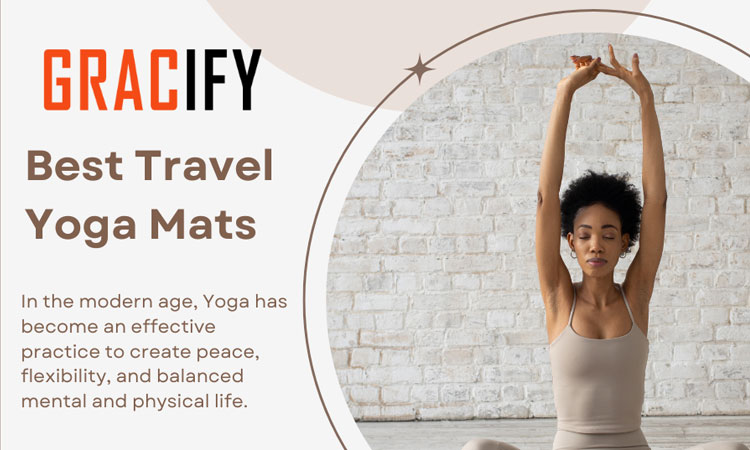
Best Travel Yoga Mat UK: In the modern age, Yoga has become an effective practice to create peace, flexibility, and balanced mental and physical life. It provides a sense of relief from the tensions of our hectic routine life. Yoga mats make our practice easier. We found these mats helpful in the tough and stretchy movements due to their specific structure.


If you travel frequently and do not want to create a gap in your practice then it is necessary to have a reliable travel yoga mat. In this guide, we will deeply explore the best travel yoga mats and also provide sufficient information about the leading brands available in the UK.


Things to Consider Best Travel Yoga Mat UK


When you are moving towards choosing the best travel yoga mat uk, there are some important factors that you must keep in mind because all yoga mats are not of the same quality. Specially travel yoga mats have some important and different traits than the other ones.


1. Weight and Portability

When you are going to select your best travel yoga mat, the first and foremost thing is its weight. A travel mat must be lightweight so it becomes easy to carry it anywhere. If you have a lightweight and high quality travel mat then it is convenient to roll up and it will not take so much space in your luggage. Ideal travel yoga mats typically weigh between 1.5 to 2.5 pounds which are basically in demand.


Now modern yoga mat companies designed them with a carrying strap or bag just to make them more reliable for you. This feature is not only useful in their easy transport but also remarkable in its protection. Its smart size prevents to create a mess in your suitcase.


2. Thickness and Cushioning

In the common observation, the thicker yoga mats offer more comfort and support as compare to the thinner ones. They are typically suitable for those who need extra padding for their joints on hard surfaces. On the other hand, the travel yoga mats are often thinner than the standard ones because of their different demands and needs.


As we already discussed the travel yoga mat must be thin and lightweight to resolve the problem of carrying it. The best travel yoga mats tend to range from 1.5mm to 5mm thick which makes them easy to transport without any discomfort.

SEE ALSO  Online Yoga Teacher Training Course


3. Grip and Stability

Another important and considering factor about the best yoga mat is its grip. It must be provided with a stable and non slippery surface that can improve your performance even if you are drenched in sweat. This feature will be very effective in building up your confidence while you are practicing more dynamic or sweaty styles of yoga like Vinyasa or Ashtanga. It prevents us from the risk of injuries.


Most of the yoga mats are prepared from high-quality, non-toxic materials such as thermoplastic elastomer (TPE), natural rubber, or PVC that offer superior grip. These types of surfaces reduce the tension to slip and provide good and reliable support and grip to your feet and hands. You will feel secure during your practice, no matter the environment.


Often the best travel yoga mats feature textured surfaces to enhance grip, then it does not matter whether you are practicing on slick hotel floors or outdoor surfaces.


4. High quality material and Eco-friendliness

Another considerable factor about the travel yoga mat is that it must be made of high quality material and durable which must withstand for a long time. A traveling mat does not only face the frequent rolling and folding but also bears different environmental changes. When you have to carry on your yoga practice anywhere then you will prefer such types of mats that can be able to withstand the exposure to various climatic ups and downs.


As we are all well aware of the increasing environmental risk, in this condition we ought to choose mats made of eco friendly materials. We should avoid the traditional mats made from eco conscious materials like natural rubber, jute, or TPE. Many yoga mat companies offer mats prepared with biodegradable materials free from harmful chemicals. These mats are much better than PVC mats.


5. Easy to Clean

A travel yoga mat must have the quality to clean it easily and fastly. When you tend to practice yoga at various locations then its cleanliness might become challenging for you. To keep your concern in mind we just prefer to select the best travel yoga mats that can easily be washable in a machine or wipeable with a damp cloth. Such kind of mats can comfortably deals with dirt, dust, and sweat and will be helpful to save your time and effort.

SEE ALSO  Hatha Yoga vs Vinyasa Yoga


Top Brands for Best Travel Yoga Mat UK

We have many yoga essentials brands that offer the best mats in the UK, but there are selective ones that do not compromise on quality. Here we will provide you with the details of the top brands:


1. Liforme

Liforme is a very popular and well reputed yoga mats brand which attract people due to the superb quality of its mats. It offers environmentally friendly and biodegradable mats that is the prime importance and demand of this age. These mats are absolutely free from toxic materials. This brand also perfectly meets the needs of travelers and provides them with their desirable yoga traveling mats.


2. Gaiam

Now we are going to move to another brand that is Gaiam. It has gained the priority and favor of the masses due to its budget friendly trait. It provides the best travel yoga mats that are well known for their lightweight and durability. These mats are made with PVC having features like easy to carry and clean. At just 1.5mm thick, it offers the perfect balance between portability and comfort.


3. Manduka

Manduka is also a worth considering brand in UK that is actually popular due to its durability and cushioning. It offers mats that are made with natural rubber which provide excellent support while you are performing difficult and stretchy movements. These mats have a non slippery surface that is perfectly suitable for your good performance even if you are so sweaty. These mats are the best choice for those who need extra cushioning on rough and tough surfaces. They are easy to transport and roll up even if you travel frequently.


4. Jade Yoga

Jade Yoga mats are also become the interest and demand of many yoga lovers. They are made of non-toxic, sustainable, and natural rubber which provides extra and remarkable grip. They are so comfortable and lightweight. If you are looking for a washable and eco-friendly mat then Jade Yoga mats will be a good choice.


5. Lululemon

Lululemon does not need any introduction regards yoga products. It offers premium quality yoga essentials which is the major reason for its popularity. Its travel yoga mats are of top quality that not only provide grip and cushioning but are also lightweight, compact, and highly durable. They are so versatile that they are equally suitable and useful for both beginners and advanced practitioners.

SEE ALSO  Guide to Best Gym Bag with Yoga Mat Holder


Flying With a Travel Mat: What Guides Don’t Mention

If you’re taking your travel mat on a flight, a couple of practical points rarely get covered. Rolled inside checked luggage, weight is rarely an issue given how light travel mats are, but if you’re trying to fit one into hand luggage, check your airline’s cabin bag dimensions first — a rolled mat can be longer than it looks flat, and budget airlines with strict hand-luggage sizing (common on UK short-haul routes) can be stricter about this than you’d expect. Foldable travel mats, which pack flatter than rolled ones, are worth considering specifically if hand luggage space is tight. There’s no security restriction on yoga mats themselves — they pass through scanners like any other soft item, so this is purely a space and weight consideration, not a customs one.


Frequently Asked Questions

Are foldable travel mats as durable as rolled ones?
Generally similar in materials and lifespan, though the fold lines on some foldable mats can eventually show as permanent creases over long-term heavy use, which rolled mats are less prone to.

Can I use my travel mat as my everyday mat too?
You can, but the thinness that makes it portable (1.5-5mm) means less cushioning for joint-sensitive poses during daily use — many people keep a thicker mat at home and reserve the thin one specifically for travel.

Do travel mats need a separate travel bag, or does rolling with a strap suffice?
A strap is enough for casual carrying, but a dedicated bag adds real protection against dirt and damage inside a suitcase, which matters more the more often you travel with it.

Conclusion

At the sum up of these precious suggestions for the Best Travel Yoga Mat UK, we just want to say that the right understanding of the travel yoga mats is the key to the perfect choice. When you have found all the explained factors in your mat, then you must not waste your time thinking about its selection. It does not matter whether you are a frequent traveler or simply visit somewhere, choosing the right and perfect yoga mat is crucial to carrying on your practice.


All the above mentioned brands tried their best to meet your needs. Top ranked brands like Liforme, Gaiam, Manduka, Jade Yoga, and Lululemon provide high-quality Best Travel Yoga Mat UK that offers the perfect balance of comfort, ease, durability, weight, and portability and facilitates cleanliness.

Continue Reading
Click to comment

Leave a Reply

Your email address will not be published. Required fields are marked *

Health

Yoga for Back Pain: A Complete UK Guide

Author avatar

Published

on

By

Yoga for Back Pain UK Wellness Guide (Featured v2)

Back pain is one of the most common reasons people try yoga in the first place — and one of the most common reasons they give up on it too quickly, usually because they start with the wrong poses or push through pain that should have been a signal to stop. If you’re dealing with a stiff lower back after a desk-bound week, a nagging ache between your shoulder blades, or something more chronic that’s been with you for months, yoga can genuinely help — but only when it’s approached with some care and a realistic understanding of what it can and can’t do.

This guide walks through what the evidence actually says about yoga and back pain, which poses tend to help (and which ones to avoid depending on your specific issue), how to build a safe home practice, and when back pain is a sign you should see a doctor or physiotherapist rather than unroll a mat.

What the Evidence Actually Says About Yoga and Back Pain

Yoga isn’t a miracle cure, and any article that tells you otherwise is overselling it. But the research base here is genuinely stronger than for most “alternative” approaches to back pain. The UK’s National Institute for Health and Care Excellence (NICE) includes group exercise programmes — and yoga specifically has been studied as one — among the first-line recommendations for persistent low back pain, alongside general physical activity and, where needed, manual therapy or psychological support for chronic cases.

Multiple clinical trials, including a well-known one published in the Annals of Internal Medicine, found that a 12-week course of yoga classes produced improvements in back function comparable to conventional stretching exercises and physiotherapy — meaningfully better than usual care alone, but not dramatically better than other structured movement. In plain terms: yoga works about as well as other well-designed exercise programmes, and it works because it’s exercise that improves strength, flexibility, and body awareness — not because of anything mystical happening on the mat.

The mechanism is fairly well understood. Chronic low back pain is very often linked to a combination of weak deep core and gluteal muscles, tight hip flexors and hamstrings, and poor movement patterns that load the spine unevenly — think prolonged sitting, inconsistent posture, or simply not moving enough during the day. A well-sequenced yoga practice addresses several of these at once: it builds core and back strength gradually, improves hip and hamstring flexibility, and — perhaps most usefully — teaches you to notice tension and poor alignment before it becomes painful.

Which Type of Back Pain You Have Matters

“Back pain” isn’t one thing, and the right approach differs depending on what’s actually going on. Broadly:

Mechanical or postural low back pain — the kind that flares up after long sitting, poor lifting technique, or general deconditioning — tends to respond well to yoga’s combination of strengthening and stretching. This is the most common type and the one most of this guide is aimed at.

Sciatica or nerve-related pain — pain that radiates down one leg, often with numbness or tingling — needs a more careful approach. Certain forward folds and twists can aggravate a compressed nerve root, so gentler, extension-based movement (and professional guidance) is usually safer than a generic “yoga for back pain” sequence.

Pain following a specific injury (a fall, a car accident, a disc herniation confirmed by imaging) should be assessed by a doctor or physiotherapist before you start any new exercise routine, yoga included.

Pain associated with osteoporosis requires avoiding deep forward folds and aggressive spinal flexion, since these positions increase the risk of compression fractures in a weakened spine.

If you’re not sure which category you fall into, that uncertainty is itself a reason to check with a GP or physiotherapist before working through the poses below — a five-minute conversation can save weeks of setback.

Poses That Genuinely Help Most Types of Back Pain

These are the poses most consistently recommended in the clinical yoga-for-back-pain literature and by physiotherapists who incorporate yoga into rehab programmes. Move into each one slowly, breathe steadily, and never push into sharp or radiating pain — a dull stretch sensation is normal, a sharp pinch is not.

SEE ALSO  How to Fix a Slippery Yoga Mat? Possible Solutions

Cat-Cow (Marjaryasana-Bitilasana)

On hands and knees, alternate between arching the spine (cow) and rounding it (cat) in time with your breath. This is often the single most-recommended movement for back pain because it takes the spine through a full, gentle range of motion without any load-bearing risk. Ten slow rounds first thing in the morning is a genuinely useful habit for anyone with a stiff lower back.

Child’s Pose (Balasana)

Kneeling with hips back toward the heels and arms extended forward, this pose gently stretches the lower back and can relieve tension between the shoulder blades. If your knees or hips are tight, place a cushion between your calves and thighs to reduce the stretch intensity.

Sphinx Pose (Salamba Bhujangasana)

Lying on your front and propping up onto your forearms, this is a gentle backbend that strengthens the muscles supporting the spine without the intensity of a full cobra pose. It’s particularly useful for people who sit for long periods, since it counteracts the forward-flexed posture of desk work.

Bird Dog (Table Balance)

From hands and knees, extend the opposite arm and leg while keeping the hips level and the core engaged. This is less a stretch than a strengthening exercise, and it directly targets the deep stabilising muscles — the transverse abdominis and multifidus — that are consistently found to be weaker in people with chronic low back pain.

Supine Twist (Supta Matsyendrasana)

Lying on your back, drop both knees to one side while keeping shoulders grounded. This gently mobilises the spine and can relieve tightness in the lower back and hips. Keep the twist gentle — this is not a pose to force.

Bridge Pose (Setu Bandhasana)

Lying on your back with knees bent and feet flat, lift the hips while pressing through the feet. This strengthens the glutes and hamstrings, which take pressure off the lower back when they’re doing their share of the work in daily movement like standing and walking.

Legs-Up-the-Wall (Viparita Karani)

A fully passive pose — lying on your back with legs resting up a wall — that’s less about the back directly and more about giving your whole nervous system a chance to downshift out of the tension that often accompanies chronic pain. Ten minutes here at the end of a session, or on its own on a bad day, is genuinely restorative.

Poses to Approach with Caution or Avoid

Some commonly taught yoga poses can aggravate back pain, particularly for beginners or people with disc-related issues:

Deep forward folds (like a full standing forward bend with rounded spine) can increase pressure on lumbar discs, especially if hamstrings are tight and the movement pulls from the lower back rather than the hips.

Full wheel pose and other deep backbends place significant compressive load on the lower back and shouldn’t be attempted by beginners or anyone with acute pain.

Deep, fast twists — especially in a warmed-up “flow” class where you’re moving quickly — can aggravate disc or nerve-related pain if done without control.

Any pose your teacher or an app pushes you into that causes sharp, radiating, or worsening pain should be skipped regardless of how “beginner-friendly” it’s labelled. Pain that shoots down a leg, causes numbness, or gets noticeably worse during or after practice is your body telling you to stop and get it checked, not push through.

Building a Safe Home Practice

You don’t need an hour-long class to get meaningful benefit. Consistency matters far more than duration for back pain specifically — a focused 15-20 minute routine, done most days, will outperform an occasional 90-minute class.

SEE ALSO  Guide to Best Gym Bag with Yoga Mat Holder

A sensible structure: start with 2-3 minutes of Cat-Cow to warm the spine, move through Sphinx and Bird Dog for gentle strengthening, add a Supine Twist and Bridge Pose, and finish with a few minutes in Legs-Up-the-Wall or Child’s Pose to let everything settle. Keep movements slow and controlled — back pain rehab is not the place for fast-paced flow sequences, especially early on.

A firm, supportive mat matters more here than in most other styles of practice, since several of these poses involve kneeling or lying with direct spinal contact with the floor. If your existing mat is thin, a folded blanket underneath your knees and lower back during floor poses makes a real difference to comfort and, by extension, to how consistently you’ll actually do the routine.

Props and Equipment That Make Back-Pain Yoga Easier

A few inexpensive props remove a lot of the friction that stops people with back pain from sticking with a practice. A pair of yoga blocks brings the floor up to meet you in poses like a supported forward fold, reducing strain on tight hamstrings that would otherwise pull on the lower back. Alternatively, a bolster or a firmly rolled blanket under the knees during Bridge Pose or under the chest during Sphinx makes both poses considerably more comfortable for anyone with sensitive knees or a stiff thoracic spine.

Likewise, a folded blanket under the hips during seated poses tilts the pelvis forward slightly, which for many people with lower back tightness immediately reduces strain. None of this is essential — you can do a perfectly good back-pain routine with nothing but a mat — but for anyone finding certain poses uncomfortable rather than simply challenging, props are usually the fix, not a sign the pose is wrong for you.

Mat thickness is also worth a specific mention here, since so much of a back-pain practice happens on the floor. A very thin mat (3mm or less) can make kneeling and lying poses genuinely painful on a hard floor, which discourages consistency more than almost anything else. Something in the 5-6mm range, or a thin mat doubled up with a folded towel under the knees and lower back, tends to be the more comfortable choice for this specific use case, even though a thicker mat is sometimes discouraged for balance-focused styles.

A Simple Four-Week Progression

Rather than attempting a long, ambitious sequence from day one, a gradual build tends to produce better adherence and fewer setbacks. In week one, keep sessions to around ten minutes: Cat-Cow, Child’s Pose, and Legs-Up-the-Wall, done daily if possible, simply to get the spine moving gently and build the habit. During week two, add Sphinx Pose and a gentle Supine Twist, extending sessions to roughly fifteen minutes. By the third week, introduce Bird Dog and Bridge Pose to start building strength alongside the mobility work from the first two weeks, bringing total practice time to around twenty minutes. By week four, most people can hold a full routine combining all seven poses from this guide, moving slowly between them with a few breaths in each position, for a session of twenty to twenty-five minutes.

Throughout this progression, the guiding rule is simple: if a pose consistently leaves you feeling worse rather than looser the following day, drop back a stage and give your body more time before reintroducing it. Progress in back-pain rehabilitation is rarely linear, and a setback after a good week doesn’t mean the approach isn’t working — it usually just means the pace needs adjusting.

Common Mistakes That Undermine a Back-Pain Yoga Practice

A handful of habits show up again and again in people who try yoga for back pain and don’t get the results they hoped for. The first is treating a general “power yoga” or fast-paced vinyasa class as interchangeable with a back-care routine. Studio flow classes are built for fitness and flexibility in a general population, not for someone actively managing pain, and pushing through unfamiliar poses at speed is a common way people with back issues get hurt trying to get better. The second is chasing flexibility over stability: spending all your time on deep stretches while skipping strengthening poses like Bird Dog leaves the muscles that support the spine underdeveloped, which does little for pain that stems from weakness rather than tightness.

SEE ALSO  Is an Exercise Mat the same as a Yoga Mat?

The third is inconsistency — an intense session once a week doesn’t give the nervous system and tissues the steady, repeated input that seems to matter most for pain reduction, so a shorter routine most days works better. And the fourth, already mentioned but worth repeating, is ignoring pain signals in the name of “pushing through” — a habit that works against you here far more than it helps.

When to See a Doctor Instead of (or Alongside) Trying Yoga

Yoga is a reasonable first step for ordinary mechanical back pain, but it isn’t a substitute for medical assessment in several situations. See a GP or physiotherapist, rather than starting or continuing a yoga routine on your own, if you have: pain that radiates down one or both legs, especially with numbness, tingling, or weakness; back pain following a fall, accident, or other specific injury; pain that wakes you at night or doesn’t ease with rest; unexplained weight loss alongside back pain; or loss of bladder or bowel control (this needs emergency care, not a yoga class).

A known diagnosis of osteoporosis, spinal stenosis, or a herniated disc means certain movements need to be avoided entirely, and pain that has persisted or worsened over more than a few weeks despite gentle movement and rest also warrants medical review. None of this means yoga is off the table — many physiotherapists specifically prescribe modified yoga-based exercises as part of rehab — but it means the sequence and poses should be chosen with professional input rather than a generic online guide.

Frequently Asked Questions

Is it safe to do yoga every day if I have back pain?

For gentle, well-chosen poses like the ones above, daily practice is generally safe and often more effective than occasional longer sessions, since consistency helps build the strength and mobility that prevent flare-ups. The exception is if a session leaves you more sore the next day rather than looser — that’s a sign to scale back intensity or frequency and check in with a physiotherapist.

Can yoga make back pain worse?

Yes, if the poses are wrong for your specific issue or done with poor form — this is genuinely common, particularly with fast-paced classes that don’t account for individual injuries. Sciatica, disc herniations, and osteoporosis in particular require modified approaches. Starting slow, choosing gentle poses like the ones in this guide, and stopping at the first sign of sharp or radiating pain minimises this risk considerably.

How long before yoga helps with chronic back pain?

Clinical trials generally measured outcomes over 12 weeks of consistent practice, with many participants noticing some improvement in function and pain within 6-8 weeks. That said, chronic pain is individual, and a lack of quick results isn’t a reason to assume it won’t work — nor is it a reason to push harder than is comfortable in the meantime.

Does yoga help with back pain, or is regular stretching just as good?

The honest answer, based on the trial evidence, is that yoga performs about as well as other structured stretching and strengthening programmes for most mechanical back pain — the value of yoga specifically is that it packages mobility, strength, and breath-based relaxation into one consistent habit, which for many people is easier to stick with than a generic gym-based exercise sheet. If you already have a stretching or physiotherapy routine you enjoy and follow consistently, there’s no strong evidence that switching to yoga specifically will outperform it.

Continue Reading

Yoga

Hatha Yoga vs Vinyasa Yoga

Author avatar

Published

on

By

How-to-Fix-a-Slippery-Yoga-Mat
Disclosure: This article may contain affiliate links. Gracify may earn a small commission at no extra cost to you if you make a purchase through these links. We only recommend products we genuinely believe in.

Comparison between Hatha yoga vs Vinyasa yoga: Yoga has become a part of our lives due to its large number of health benefits. It has introduced many techniques that are considered the foundation for various fitness strategies. Experts and yoga teachers have introduced several ways and styles in which yoga can be practiced.


Hatha yoga and Vinyasa yoga are some of those styles which people usually prefer. The origin of both styles is very much similar to each other but still, they differ significantly in many ways. We will discuss some distinct points between these styles and also help you in choosing a better style for practice.


What is Vinyasa Yoga or Vinyasa Flow Yoga?


A most common yoga style that focuses on controlling your body’s movement and breath. It can help you to create a smooth and continuous flow while posing. Therefore, it may also be referred to as flow yoga, which is suitable for both beginners as well as experts.


Key Features of Vinyasa Yoga:


• Coordinating Movements:

Vinyasa Yoga consists of inhale or exhale movements that create a meditative flow.


• Transitional Poses:

This form of yoga helps you to practice transitional and creative poses with more ease and smoothness.


• Energizing:

It provides energy by keeping your body more active due to the smooth flow of poses.

SEE ALSO  Guide to Best Gym Bag with Yoga Mat Holder


Vinyasa Yoga Poses


Vinyasa yoga poses includes many useful positions such as;


• WarriorII or Virabhadrasana II

• Facing Dog or Adho Mukha Svanasana

• Four Limbed Staff Pose or Chaturanga Dandasana

• Plank Pose or Phalakasana

• Triangle Pose or Trikonasana

• Chair Pose or Utkatasana

• Children Like Pose or Balasana

• Upward Facing Dog Movement or Urdhva Mukha Svnasana


Vinyasa Yoga or Vinyasa Flow Yoga Benefits

We can get a number of physical as well as spiritual benefits by adding Vinyasa yoga in our daily lives. Some of the Vinyasa yoga benefits are given below:


Heart Health:

It can help you to maintain your heart health by practicing its smooth poses regularly.


Stress management:

It helps in different ways such as reducing stress and anxiety through inhale and exhale movements. Thus, it helps to maintain a peaceful state of mind.


Flexibility:

It also enhances strength and flexibility of your muscles.


Weight management:

You can burn a heavy amount of calories and can easily maintain your body’s weight.


Let’s move to our next yoga pose in our comparison Hatha yoga vs Vinyasa yoga.


What is Hatha Yoga?

It is a classic type of yoga which gives birth to many modern yoga techniques and practices. Actually the term “hatha” is used to describe a form of yoga with slower movements and focuses on creating a balance between poses and breath.


Key Features of Hatha Yoga:


Basic Practice:

It is a type of yoga that describes the basic fundamentals of yoga techniques.

SEE ALSO  Is an Exercise Mat the same as a Yoga Mat?


Slower movements:

It involves slow movement poses with a deep focus on breath control.


Beneficial:

It is an easy yoga form which is useful and convenient for beginners as well experts.


Hatha Yoga Poses


Basic Hatha yoga poses may include:

• Mountain like Pose or Tadasana

• Tree like Pose or Vrikshasana

• Cat and Cow Pose or Marjaryasana-Bitilasana

• Cobra Position or Bhujangasana

• Seated Forward Bend or Paschimottanasana

• Bridge like Pose or Setu Bandhasana

• Corpse like Pose or Savasana


Hatha Yoga Benefits

Some key benefits of hatha yoga may include:


Flexibility:

Such type of yoga can help you a lot in making your muscles more flexible and stretchable.


Improves Lungs Functionality:

Deep control of breathing can be helpful in improving your respiratory health.


Reduce Stress:

The deep and calm practice reduces stress and anxiety levels.


Increased Strength:

Its poses are very essential for increasing strength in the human body.


Which Should Beginners Choose: Hatha or Vinyasa?

If you’re completely new to yoga, Hatha is generally the easier starting point. Poses are held longer, with more time to check your alignment, and classes move at a slower pace. Vinyasa’s continuous, flowing sequences can be a better fit once you’re comfortable with the basic poses and want a more cardio-focused, dynamic session. If you have a joint injury, balance issues, or are returning to exercise after a break, Hatha’s slower pace and static holds are usually the safer choice. A physiotherapist or your GP can advise if you have a specific injury or condition to work around.

SEE ALSO  Which Material is Best for Yoga Mat

Many UK studios and online platforms label classes “Hatha”, “Vinyasa Flow”, or “Vinyasa Yoga”. Checking the class description for pace and intensity before booking is more reliable than the label alone, since teaching styles vary between studios.

Frequently Asked Questions

Is Hatha or Vinyasa better for weight loss?

Vinyasa’s continuous movement typically burns more calories per session due to its faster pace. But Hatha still offers strength and flexibility benefits — consistency matters more than the specific style you choose.

Can I switch between Hatha and Vinyasa yoga?

Yes, many practitioners combine both — using Hatha for slower, alignment-focused sessions and Vinyasa for more dynamic, cardio-style practice.

Is Hatha yoga safe if I have an injury?

Hatha’s slower pace generally makes it easier to work around injuries. That said, always check with a physiotherapist or your GP before starting if you have a specific condition, and let your teacher know before class.

Conclusion

To conclude we can say that both these types of yoga have their own benefits. Although both are helpful for you to promote your mental and physical health. We have described Hatha yoga vs Vinyasa yoga in detail above. Read through it carefully, and you’ll be able to choose whichever suits your requirements.

Continue Reading

Yoga

Online Yoga Teacher Training Course

Author avatar

Published

on

By

200 Hour Yoga Teacher Training

The concept of Yoga has evolved traditionally and has become a global phenomenon so, it is most difficult to choose the best Online yoga teacher training course. It keeps on embracing physical as well as spiritual well-being. With the growth of this phenomenon, the demand for choosing a certified yoga instructor increases.


Because of the increasing demand, people started picking it as a profession and taking an interest in how one can become a certified teacher. Online yoga teacher training courses are very popular these days.  It allows yoga enthusiasts to pursue their passion online worldwide.


This article guides the criteria for choosing yoga teacher training courses online. We will also explore that what are the most popular yoga teacher training courses online. Some of the courses may include a 200-hour or a 300-hour online yoga training session. This article will also highlight the essential details regarding these courses.


Rise of Online Yoga Teacher Training Courses


Online yoga teacher training courses are considered very convenient for persons who are involved in juggling work. These programs are designed to provide in depth yoga education to persons who do not have the time to attend traditional courses. Such programs cover all the essentials of yoga such as the history and philosophy of yoga, its anatomy, teaching methodology, and practice.


Students can learn all minor details under the supervision of yoga experts through high-quality platforms and interactive live sessions. It is the best way to connect with expert instructors and fellow trainees globally.


These programs are considered an opportunity for aspiring instructors to learn and grow. Yoga Alliance also provides online certifications for these programs.


Criteria to Choose Online Yoga Teacher Training Courses


SEE ALSO  Which Material is Best for Yoga Mat

Let’s discuss the requirements for choosing the right online yoga teacher training course. A large number of options are available for you in this regard. Here are some key requirements to consider while choosing a yoga training session, which are as follows:


Yoga Alliance Certification

Before choosing a course, must ensure that the course is certified by Yoga Alliance. The certification must be recognized globally. As it will provide credibility and opens up many teaching opportunities for you.


Qualified Instructors

Must try to learn under the supervision of qualified and experienced yoga instructors. Do research on the necessary qualifications and experience of yoga instructors. Your instructors must have deep knowledge of the practice and philosophy of yoga.


Course Content

Make an effective strategy and evaluate the syllabus to be more focused on your goals. Most of the online yoga teacher training courses cover:


  • History and philosophy of yoga
  • Human body structure and anatomy
  • Teaching techniques
  • Class arrangements
  • Yoga Practice


Flexibility and Accessibility

Online courses usually offer flexible schedules to make yoga learning more convenient. It is crucial to check if the course offers flexible learning schedules so that you can manage your time easily during your busy life routines.


Community Support

Online yoga learning courses are the best way to connect with the community. As these programs involve peer interactions and group discussions which are essential for enhancing your learning experience.


Best Yoga Teacher Training Courses in the World


200 Hours Yoga Teacher Training Yoga Alliance

A 200 Hours Yoga Teacher Training Yoga Alliance course is one of the best yoga learning programs. It provides a framework to learn the basic yoga principles and practices.


Key Features of the 200 Hour Session:


SEE ALSO  Online Yoga Teacher Training Course

Comprehensive Curriculum:

The program aims to provide essential details regarding the basic principles of asana practice and meditation.


Eligibility to Teach:

The course allows you to be considered as a certified/registered yoga instructor after registering with Yoga Alliance.


Duration:

The training usually takes 8–12 weeks including learning and practice.


300 Hours Yoga Teacher Training Yoga Alliance


A 300 Hours Yoga Teacher Training Yoga Alliance is an advanced level course that provides you with knowledge and understanding of yoga.


Key Features of the 300 Hour Program:


Specific Styles:

It also includes learning different teaching styles such as Yin Yoga etc.


Deep Knowledge:

It offers advanced knowledge of Asana, practicing yoga therapy and a deep understanding of anatomy.


Duration:

It usually takes 12–16 weeks to complete.


Benefits of Online Yoga Teacher Training Courses

Online yoga teacher training courses offer several advantages:


Learn Globally:

You can learn from expert instructors with the help of these courses without any kind of geographical limitations.


Less Cost:

Online courses are cost-effective as there are no travel expenses. Therefore, you can save time and money.


Flexible Schedule:

Online courses allow you to learn yoga on your terms without disturbing your work schedules.


Community interactions:

These courses help you to interact with other aspirants through live sessions and discussions.


Is Online Yoga Teacher Training Recognised in the UK?

If you plan to teach in the UK, check that any online course you choose carries genuine Yoga Alliance (or Yoga Alliance Professionals) accreditation, since UK studios, gyms, and insurers will typically ask for this before offering you work or public liability insurance. A 200-hour online course in the UK typically costs between £800 and £1,800, while a 300-hour advanced course tends to range from £1,200 to £2,500, though prices vary by provider and whether live mentoring or in-person practicum days are included.

SEE ALSO  Guide to Best Gym Bag with Yoga Mat Holder

Also check whether the course includes any assessed practical teaching hours, since a purely video-based course with no live feedback can leave gaps in your ability to safely cue and adjust students in person, something UK employers and insurers increasingly ask about at interview.

Frequently Asked Questions

Is an online yoga teacher training certificate valid in the UK?

Yes, as long as the course is accredited by a recognised body such as Yoga Alliance or Yoga Alliance Professionals. Always check accreditation before enrolling if you intend to teach professionally in the UK.

How much does online yoga teacher training cost in the UK?

Expect to pay roughly £800–£1,800 for a 200-hour course and £1,200–£2,500 for a 300-hour course, depending on the provider and whether live mentoring is included.

Can I get insured to teach yoga after an online-only course?

Most UK insurers require proof of accredited certification, and some also want evidence of assessed practical teaching experience, so check with providers like Balens or Yoga Alliance Professionals before you enrol.

Conclusion

Your online yoga teacher training journey can help you to learn a lot about yoga skills. You can easily choose a program as per your interest and can achieve your goals and aspirations. You can learn from a basic yoga teacher course to an advanced level course under the supervision of next-level instructors. These courses not only provide deep guidance but also enhance your personal growth.


Please share your views in our comments section regarding the online yoga teacher training course uk.

Continue Reading

Trending

Gracify is using affiliate links where required in the website. If you make a purchase through these them, gracify may receive a small commission at no extra cost to you. Copyright © 2026 Gracify.co.uk