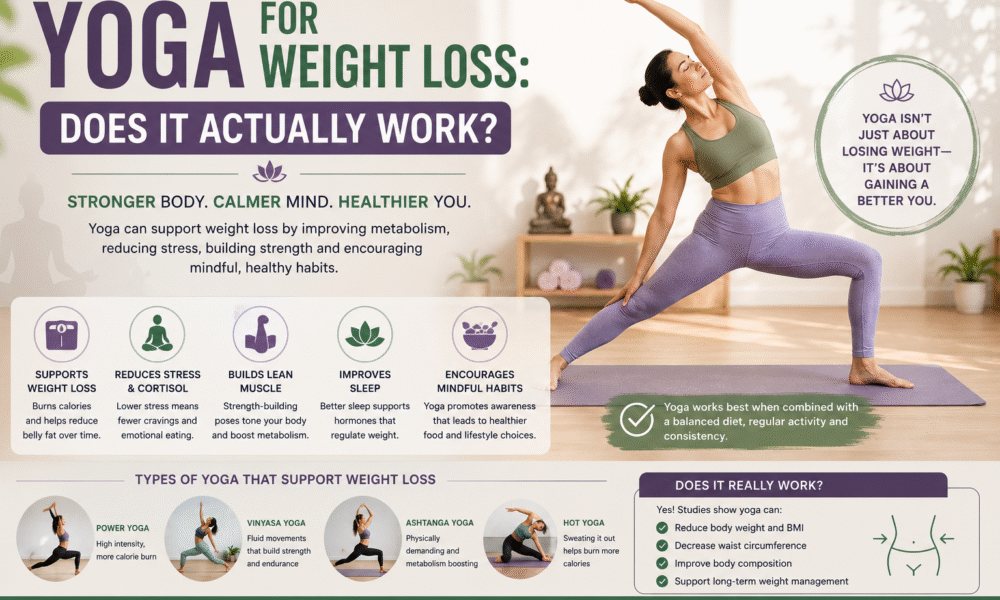
Yoga’s relationship with weight loss is more nuanced than social media tends to suggest. It’s not primarily a calorie-burning exercise in most of its common forms, but that doesn’t mean it has nothing to offer if weight loss is a goal.
What the Evidence Actually Shows
Gentle styles like Hatha or restorative yoga burn relatively few calories per session compared to running or cycling — often in a similar range to a brisk walk. More dynamic styles, particularly Vinyasa or Power Yoga, burn noticeably more, sometimes approaching moderate cardio levels during a vigorous class. Where yoga’s research is genuinely strong is in areas that indirectly support weight management: reducing stress-related eating, improving sleep quality, and building the kind of body awareness that makes overeating easier to notice and moderate.
Which Styles Burn the Most
- Restorative and Yin: minimal calorie burn, but valuable for recovery and stress reduction.
- Hatha: gentle to moderate, good for beginners and consistency.
- Vinyasa/Flow: continuous movement between poses, meaningfully higher calorie burn.
- Power Yoga/Ashtanga: the most physically demanding common styles, closer to a full workout.
Our Hatha vs Vinyasa comparison covers the practical differences between the two most common starting points in more depth.
Realistic Expectations
Yoga alone, especially gentler styles practised a few times a week, is unlikely to drive significant weight loss on its own — this is worth being honest about rather than overselling it. Where it performs best is as one part of a wider approach: alongside a reasonable diet and possibly some cardio or strength work, using yoga specifically for the stress-management, recovery, sleep and mindful-eating benefits it’s genuinely good at.
Combining Yoga with Other Exercise
Yoga and more vigorous cardio work well together rather than competing — many people use yoga on rest days from running or strength training specifically for the recovery and flexibility benefits. Our yoga vs running comparison looks at how the two stack up directly and how they can complement each other rather than being an either-or choice.
Getting Started
If weight management is part of your motivation for starting yoga, a more dynamic style is worth prioritising for the calorie-burn benefit, while still building in gentler sessions for recovery. Our complete guide to starting yoga at home covers how to structure a first few weeks that includes both.
Why the Scale Isn’t the Whole Story
Weight alone is a poor measure of what regular yoga does. A practice that builds muscle while reducing fat can leave the number on the scale unchanged for weeks, even as clothes fit differently. Waist measurement, how you feel climbing stairs, and whether strength poses have become easier are all more informative markers over a two- or three-month window.
The indirect effects are probably where yoga contributes most to weight management. Better sleep and lower stress reduce the appetite dysregulation that drives late-night eating, and people who practise regularly frequently report eating more attentively without consciously dieting. That’s a slower mechanism than a calorie deficit, but it tends to be more durable. If weight loss is a medical priority for you — for example because of diabetes or high blood pressure — treat yoga as one supportive component and discuss the wider plan with your GP or a registered dietitian rather than relying on exercise alone.
Frequently Asked Questions
How many calories does a yoga session burn?
Roughly 150–250 for an hour of hatha, and 350–500 for vigorous vinyasa or hot yoga, depending on body weight and intensity — less than running, more than most people expect.
Which style is best if weight loss is the goal?
Vinyasa, power and ashtanga keep the heart rate elevated for longer, so they contribute most directly. Gentler styles still help via stress and sleep.
How often should I practise to see change?
Three to five sessions a week, alongside attention to diet, is a realistic combination for gradual change over two to three months.