Yoga
Pilates Mat vs Yoga Mat
Are you searching for the real difference between Pilates Mat vs Yoga Mat? Do you think Yoga and Pilates mind-body practices both are the same? Definitely no, so how Pilates mat and yoga mat can be the same? Both mind-body practices are different, so the mats also have a bit of difference.
Mainly both practices are focused on flexibility, strength, and inner peace. They also have a lot of similarities like controlled breathing and movements but different patterns or exercises. So, that’s why these types of questions arise in our minds for example, is a pilates mat the same as a yoga mat, or the a difference between pilates mat and yoga mat.
Let’s move a little deeper to get the answers to these questions or Pilates Mat vs Yoga Mat
Is a Pilates Mat the same as a Yoga Mat
No, both practices are different so the mats are also different. If you use the same mat for both practices, you will face discomfort impacting your exercise. As a result, you will lose your focus, and even may you also lose the real output of the exercise inner peace.
Difference between Pilates Mat and Yoga Mat
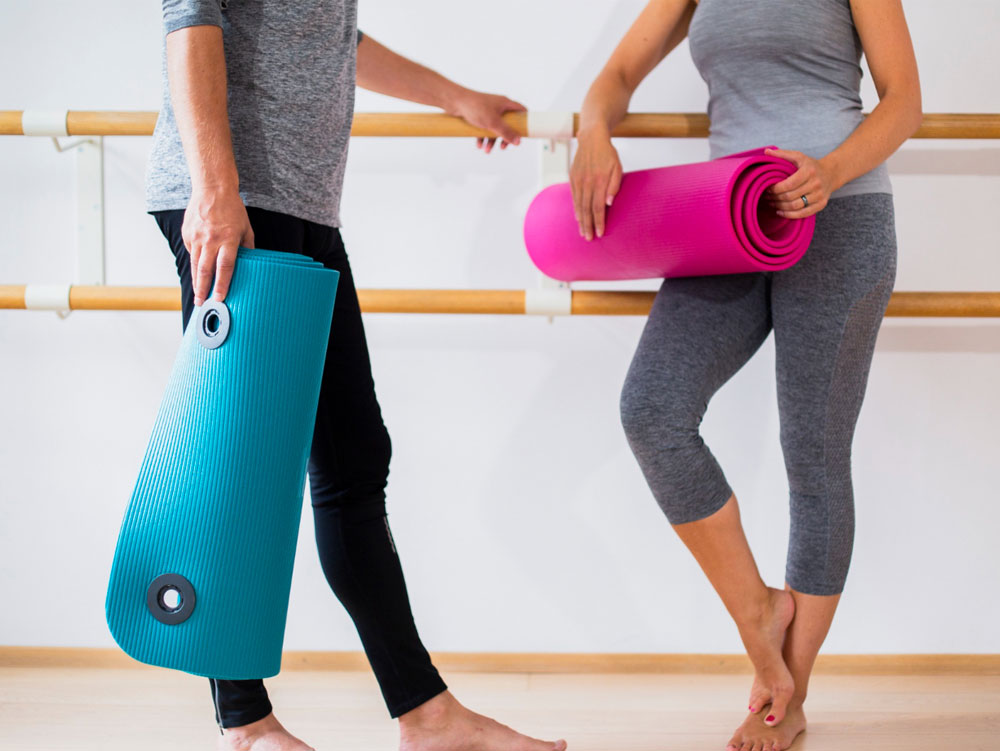
Yoga mats and Pilates mats have real differences that affect your exercises. Yoga mats are built more for balance and standing postures, while Pilates mats are built more for sitting and kneeling work.
This is the major difference. Based on this, both mats have a lot of differences in their material, thickness, sizes, density, etc.
Material difference between Pilates and Yoga Mat
Pilates mats are mostly built with synthetic materials i.e. foam to provide some extra safety layer to keens. This is the most popular material used to manufacture pilates mats due to its high cushioning. On the other hand, it has less stability in comparison to a yoga mat if standing.
Some pilates mats are being built with PVC material which is more resilient than the foams but still, it is a synthetic material that is not recommended, in order to achieve the real benefits of exercise. This material mat is inexpensive but not eco-friendly and durable.
Whereas if I talk about Yoga mats, a few of the yoga mats are still being built with PVC but they are not considered as an ideal choice. So, most yogis use other material mats such as natural rubber mats which are not only environmental-friendly but durable and long-lasting mats. It provides more cushioning and support during standing exercises.
Thickness
Pilates mats are thicker than yoga mats and the simplest reason behind it they are built for more sitting and kneeling. In Pilates exercises, you are mostly lying down — on your back, on your side, or in a quadruped position. That means you need more cushioning. That’s why the Pilates mat thickness starts from 6mm to upwards.
Comparatively, if I talk about yoga mats, they come in different thicknesses starting from 1mm to upwards. 1mm or 2mm mats are too thin. Due to the low thickness level, these thickness yoga mats are easy to carry and travel. So, most of the people who normally used traveling, prefer thin yoga mats. Read in detail about yoga mat thickness here.
Secondly, more thickness may interrupt you with balancing during yoga exercises and you feel off-balance in standing positions.
Weight or Density
As we have already mentioned above that Pilates mats are thicker than yoga mats. That increases the weight or density of a mat and makes it difficult to transport or even carry the mat. Usually, pilates mats start from 6mm up to 15mm thick whereas an ideal yoga mat thickness is between 3 to 5mm
Size
A regular yoga mat is normally 68 inches in length, which can go up to 74 inches for a long yoga mat, and 24 inches in width. Whereas, Pilates mats are usually the same in height but wider in width.
Can I use Pilates Mat for Yoga?
Yes, a Pilates mat can be used for yoga exercises, but it’s not recommended. You’ll run into issues with cushioning, thickness, and gripping. Through this, you will lose your focus during exercise. So, it is preferable to use yoga mats for yoga.
Making the Right Choice
First of all, finalize which exercise you want to perform Pilates or Yoga. After finalizing, keep your focus on key considerations like the main differences between pilates mat and yoga mat are the thickness, density/weight and the material. Thicker mats can be more problematic concerning carry, moving from one place to another, absorbing sweat and germs. And lastly, such mats are difficult to clean without proper cleaning. So, keep in mind these things while finalizing the mat for exercises.
If you plan to practice both and don’t want two separate mats taking up space, use a yoga mat of 5-6mm. But make sure, you are not a beginner, then it will work otherwise don’t try it.
What About Reformer Pilates?
If you’re doing reformer Pilates rather than mat-based classes, you generally won’t need a Pilates mat at all — reformer studios use padded carriages instead. A Pilates mat is specifically for mat-based Pilates classes, so check which style your studio teaches before buying one.
Still Deciding If You Need a Mat At All?
If you’re weighing up whether a mat is worth buying in the first place, our guide on why you need a yoga mat covers the practical reasons beyond just comfort. And once you’ve got one, proper yoga mat storage will help it last far longer, whichever type you choose.
Frequently Asked Questions
Do I need a special mat for reformer Pilates?
No — reformer Pilates uses the machine’s own padded carriage, not a floor mat. A Pilates mat is only needed for mat-based Pilates classes.
Can a yoga mat be used for Pilates instead of a Pilates mat?
Yes for occasional use, though a yoga mat is typically thinner and less dense, offering less cushioning for Pilates’ repetitive floor-based core work.
Which is thicker, a yoga mat or a Pilates mat?
Pilates mats are generally thicker and denser than standard yoga mats, providing more cushioning for the spine and joints during floor exercises.
Conclusion
The type of mat depends on what type of exercise you will practice. If you have a yoga plan then you should buy a yoga mat instead of a Pilates mat and the same for the Pilates practice.
Hopefully, I have shared all the possible answers to the questions Pilates Mat vs Yoga Mat or the difference between Pilates mat and yoga mat.
Yoga
10-Minute Morning Yoga Routine for Beginners
A simple, effective 10-minute morning yoga sequence to build a daily habit, with modifications for total beginners.
Ten minutes is a genuinely realistic amount of time to find every morning, and it’s enough to make a real difference to how the rest of the day feels. This sequence needs no experience, no equipment beyond a mat, and works whether you’re stiff from sleep or just want a calmer start than scrolling your phone in bed.
Why Morning Specifically?
Practising before the day’s demands start means there’s no competing with a full inbox or a tired evening brain. It also tends to stick better as a habit — mornings are more routine and less likely to get cancelled by an unpredictable evening. That said, if mornings genuinely don’t work for your schedule, this same sequence works just as well at any time of day.
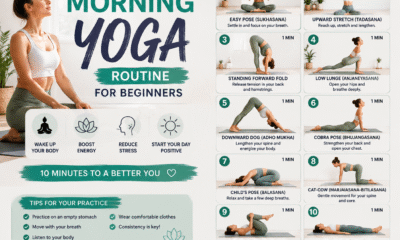
The 10-Minute Sequence
- 1 minute — Seated breathing. Sit comfortably, eyes closed, and simply notice your breath for a minute before moving. This settles the nervous system before you start.
- 2 minutes — Cat-Cow. On hands and knees, slowly alternate arching and rounding the spine with your breath. Excellent for waking up a stiff back after sleep.
- 2 minutes — Downward Dog to Forward Fold. Move slowly between the two, pedalling the feet to ease tight hamstrings and calves.
- 2 minutes — Low Lunge, both sides. Opens the hips, which tend to be tight first thing in the morning for most people.
- 2 minutes — Seated twist, both sides. Gentle spinal rotation to finish, which many people find genuinely energising.
- 1 minute — Standing or seated, a few deep breaths before starting the day.
If you’re brand new to any of these poses, our complete beginner’s guide to home yoga explains the basics in more depth, including what a wider weekly structure around a routine like this can look like.
Making It a Habit That Actually Sticks
The single biggest factor in whether a morning routine survives past week one is friction — if your mat is rolled up in a cupboard, it’s one more excuse. Leaving it unrolled somewhere visible the night before removes that barrier almost entirely. It’s also worth accepting that some mornings will only get you through half the sequence, and that’s still worth doing rather than skipping entirely.
When Mornings Feel Too Rushed
If ten minutes genuinely isn’t available some days, the breathing and Cat-Cow alone (roughly 3 minutes) still deliver a meaningful chunk of the benefit. And if mornings consistently feel like the wrong time, a calming evening sequence — like the one in our guide to yoga for stress and anxiety — might suit your schedule better without losing the habit altogether.
Adapting the Routine to Your Body and Schedule
Ten minutes is a floor, not a ceiling. On a morning when you have twenty, the simplest expansion is to repeat the standing sequence on both sides a second time rather than adding unfamiliar poses — repetition is where the movement patterns actually settle in. On a genuinely rushed morning, three rounds of Cat-Cow and a single Downward Dog held for five breaths is still a worthwhile practice and keeps the habit intact.
Bodies are also stiffest first thing, when spinal discs are at their most hydrated. That’s a good reason to be conservative with forward folds and deep twists in the first few minutes, and to keep knees generously bent in any standing fold. If you have a history of lower-back trouble, warm up with Cat-Cow and gentle standing movement before anything that loads the spine in flexion.
Frequently Asked Questions
Should I practise before or after breakfast?
Before, ideally, or at least an hour after eating. Twists and forward folds are uncomfortable on a full stomach.
Is ten minutes really enough to be worthwhile?
Yes, if it’s regular. A daily ten minutes produces more change over a month than a single long weekend session.
Do I need a mat for a short morning routine?
For standing work you can manage without one, but any kneeling or floor poses on a hard floor will be uncomfortable and less stable.
Yoga
Best Budget Yoga Mats (UK) Under £30
You don’t need to spend £80 for a good mat. What actually matters when choosing a budget yoga mat under £30 in the UK.
A good yoga mat doesn’t have to cost £80. Plenty of the design and material choices that make premium mats good are available well under £30 — you just need to know which trade-offs actually matter and which are marketing.
What You Give Up at a Lower Price — and What You Don’t
Budget mats most commonly cut costs on three things: thickness consistency (cheaper foam can compress unevenly over time), edge durability (corners fraying or peeling faster), and grip longevity (texture wearing smooth sooner than premium rubber). What you generally don’t lose at a lower price point is basic functionality — a £25 mat will support a beginner or casual practice perfectly well for a year or more of regular use.
Where to Actually Spend the Money
If your budget is tight, prioritise grip over thickness or extra length — a mat that slips is far more likely to put you off practising than one that’s slightly thin. NBR and EVA foam mats tend to offer the best grip-for-price ratio in the budget bracket; PVC mats are usually cheapest but often the least grippy underfoot. Our material comparison guide breaks down exactly how these perform against each other.
Signs a Cheap Mat Is Actually a False Economy
- No grip texture at all, or a texture that’s purely cosmetic
- Extremely thin (under 3mm) with no cushioning — hard on wrists and knees
- No indication of the base material anywhere in the listing — often a sign of inconsistent manufacturing batches
A mat that needs replacing after two months because it’s peeling or unusable isn’t actually cheaper than a £35 mat that lasts three years.
Budget Doesn’t Mean Compromising on Health
If chemical smell or off-gassing is a concern, it’s worth checking for certifications like OEKO-TEX even on budget mats — several affordable options carry them. Our piece on which brands are worth trusting is a useful cross-check regardless of price point.
Building Up From a Budget Mat
A budget mat is a genuinely sensible starting point if you’re still working out how often you’ll actually practise — there’s little point spending £80 on a mat before you know yoga is a habit that sticks. Our beginner’s guide to starting yoga at home covers what else is worth prioritising early on, and once you know your practice style and preferences, our Yoga Mat Finder tool can help you decide whether it’s worth upgrading, and to what.
What a Sub-£30 Mat Should Still Get Right
A budget price explains a shorter lifespan and a plainer finish. It does not excuse a mat that slides on the floor, sheds material onto your hands, or arrives with a chemical smell that hasn’t faded after a fortnight of airing. Those are signs of poor manufacturing rather than sensible cost-cutting, and they’re worth returning.
At this price the things to insist on are a stable underside that grips the floor, a thickness of at least 4mm so knees and wrists aren’t pressed into a hard surface, and dimensions that actually fit you — a 173cm mat is short for anyone over about 5’9″, and lying down in Savasana with your head or heels on the floor is a daily irritation. Everything else, including branding, carry straps and decorative prints, is optional. If a mat gets those three basics right, it will comfortably see you through the first year of practice.
Frequently Asked Questions
Is a cheap yoga mat worth buying at all?
For beginners, yes. A £20–£30 mat is enough to establish whether you’ll practise regularly, and by the time it wears out you’ll know exactly what you want from a replacement.
How long will a budget mat last?
With two or three sessions a week, typically around a year before the surface starts flaking or compressing permanently underfoot.
What’s the main difference from a £60 mat?
Durability and grip when damp, mostly. Premium mats hold their cushioning and their tack for years rather than months.
Yoga
Best Yoga Mats for Hot Yoga & Bikram (UK)
Sweaty hot yoga sessions need serious grip. Here is what actually matters when choosing a mat for Bikram and hot yoga in the UK.
Hot yoga and Bikram sessions push mats to their absolute limit. A room heated to 35–40°C means sweat pools fast, and a mat that grips beautifully in a cool studio can turn genuinely dangerous once it’s wet. If you’ve ever slid out of Downward Dog mid-flow, this guide is for you.
Why Hot Yoga Needs a Different Kind of Mat
Standard PVC or foam mats rely on surface texture for grip, and texture alone isn’t enough once sweat gets involved — in fact, a lot of budget mats get more slippery, not less, as they warm up. Mats built for hot yoga usually solve this one of two ways: an absorbent microfibre top layer that soaks up moisture as you go, or a natural rubber base with an aggressive grip pattern that works precisely because it’s slightly tacky when damp.
What to Actually Look For
- Wet grip, not just dry grip. Most product listings only describe dry performance — check reviews specifically mentioning hot yoga or sweaty sessions before buying.
- A closed-cell surface (common on PVC and TPE mats) resists absorbing sweat and bacteria, which matters a lot for hygiene over a heated, sweaty session.
- Machine-washable or easily wipeable — a mat you can’t properly clean after hot yoga will start smelling within weeks. See our guide to yoga mat cleaning for what actually works.
- Thickness around 3–4mm. Thicker mats trap more heat and moisture underneath, which can make them feel worse, not better, in a hot room.
Material Trade-offs for Hot Yoga
Natural rubber mats tend to be the gold standard for wet grip but come with a distinctive rubber smell that some find off-putting until it airs out. TPE mats are lighter and odour-free but generally offer less wet traction. Microfibre-topped towel-style mats (often layered over a rubber base) are increasingly popular specifically for hot yoga because the towel gets grippier as it absorbs sweat — the opposite of how most surfaces behave. Our breakdown of TPE vs EVA vs NBR vs PVC mats covers the wider material trade-offs if you want the full picture.
Don’t Forget What You Wear
Even the best mat can’t fully compensate for the wrong clothing — loose fabric that clings when wet adds its own slip risk. Our guide on what to wear to hot yoga and Bikram sessions covers moisture-wicking options that pair well with a grippy mat.
Finding the Right Mat for You
Because hot yoga performance depends so much on personal sweat levels, practice style and budget, there’s no single “best” mat for everyone. Our Yoga Mat Finder tool takes those factors into account and narrows things down based on how and where you actually practise, rather than a generic bestseller list. If sweaty hands specifically are your main issue rather than the room itself, our dedicated guide on mats for sweaty hands and feet digs into that angle further, and if slipping has already been a recurring problem, this fix guide is worth reading before you spend on a replacement.
Caring for a Hot Yoga Mat Between Classes
Hot yoga is unusually hard on a mat. Sweat carries salt and skin oils into the surface, and if a mat goes back in a bag damp it will start to smell within a fortnight and degrade faster than the material’s normal lifespan suggests. Unroll it to air-dry fully after every class — over a bannister or shower rail rather than folded — before it goes anywhere near a bag.
Wipe the surface after each session with a mild solution rather than a household antibacterial spray. Alcohol and harsh detergents strip the tack from rubber and dry out cork, which is exactly the grip you paid for. Natural rubber in particular should be kept out of direct sunlight, which breaks it down and makes it crumble at the edges. If your mat has an open-cell polyurethane top layer, avoid soaking it — it absorbs liquid readily and takes a long time to dry through.
Frequently Asked Questions
Can I use a normal yoga mat for hot yoga?
You can, but most standard PVC or TPE mats become slippery once they’re wet. A towel over the top is the usual workaround if you don’t want to buy a second mat straight away.
Do I need a yoga towel as well as a grippy mat?
If you sweat heavily, yes. Even the best-gripping mat benefits from a microfibre towel, which absorbs sweat rather than letting it pool on the surface.
How often should I clean a hot yoga mat?
A light wipe-down after every class, and a deeper clean roughly every two weeks depending on how often you practise.
-
Yoga2 years ago
Natural Rubber vs Cork Yoga Mat – which is Better?
-
Yoga2 years ago
TPE vs EVA Yoga Mat & NBR vs PVC Yoga Mat
-
Yoga2 years ago
How to Roll Up a Yoga Mat? For Long Lasting
-
Yoga2 years ago
Which is the Best Yoga Mat Thickness?
-
Yoga2 years ago
Which Material is Best for Yoga Mat
-
Yoga2 years ago
How to Clean / Wash Yoga Mat
-
Yoga2 years ago
How to Become a Yoga Instructor UK
-
Yoga2 years ago
Which is the Best Yoga Mat Size?
Natural Rubber vs Cork Yoga Mat – which is Better?
TPE vs EVA Yoga Mat & NBR vs PVC Yoga Mat
How to Roll Up a Yoga Mat? For Long Lasting
Which is the Best Yoga Mat Thickness?
Which Material is Best for Yoga Mat
How to Clean / Wash Yoga Mat
How to Become a Yoga Instructor UK
Which is the Best Yoga Mat Size?